Showing posts with label Curriculum. Show all posts

Monday, January 25, 2021

Dimensions Math Pre-K with a Toddler Review

Background

As you have probably already figured out, my little guy really has a thing for math. He loves counting, skip counting, counting backwards, jigsaw puzzles, place value blocks and other math activities (you can see my recent post of Math Activitives for Toddlers and Preschoolers here). However, he is only two and a half. He's got the fine motor skills and abstract reasoning skills of a two and a half year old. He is also like a puppy that you have to keep stimulated or he tears up the place. 

Therefore, I've been reading a lot about different methods for teaching math and started exploring curriculum. When my oldest was about 3.5, I adapted Right Start Mathematics for him (post here), but that didn't quite feel like the right fit for Archer at this point. I ended up reaching out to Singapore Math, explaining Archer's abilities and limitations and asking whether any of their materials would work. (I use Singapore Mathematics Standards Edition with my oldest, but we didn't start until level 4B). The very helpful customer service representative guided me to Dimensions Math Program. We decided, that while Archer might be ready for Kindergarten, Dimensions Pre-K was probably a good place to start. 

**In full transparency, I did receive a copy of the Dimensions Math Textbook Pre-KA and Dimensions Math Textbook Pre-KB. However, the opinions here are completely my own.**

The Curriculum:

You can see a full list of the scope and sequence of the Dimensions Pre-K level here. The curriculum is divided into two parts (A and B). Both parts have accompanying workbooks, as well as a teacher guide (there are sample pages on the linked webpages). I like that the textbooks and workbooks are all in color. However, since writing is still a developing skill for Archer (that he doesn't much enjoy), I opted not to get the workbooks. While I debated getting the teacher's guide, I decided that since we do a lot of "school" activities already, coming up with things that reinforce the lessons should be easy for us. Another family newer to early education would probably benefit greatly from the teacher's guides. We may start using them with higher levels in the future.

While Archer normally doesn't do "book work," adding in the textbook has gone well. I'm glad we went with the Pre-K level, because some skills feel familiar to him (color sorting), while other skills are new or are presenting in a way he has not seen. 

Sitting on my lap and flipping through.

The lessons in the textbook are very short. Each one is about one page front and back. On the bottom of first page of the lesson, there is an objective. Concepts usually start with some sort of scenario that provides opportunity to discuss what is seen. Then there is an opportunity for the student to answer questions or do simple tasks related to the concept. The lessons lend themselves to real world practice with manipulatives. Right now, we mostly do it with Archer sitting in my lap. He points to things and answers verbally, rather than writing. As we get further in the curriculum (and his fine motor skills improve) I will have him write more.

Here's an example:

Chapter 1 Lesson 5: Rough, Bumpy, Smooth

Objective: Explore textures and learn the word "rough."


So far, he has really liked it. When he sees the book, he asks to sit down and look at it together. While, I am trying to do them somewhat in order, at least in terms of supplemental activities, he often flips through it and finds pages that interest him, so we do those too. Right now, we're only getting it out a couple of times a week.

Honestly, for someone who just wants to open a textbook, look through the pages and have their student fill it out, just the Pre-KA textbook probably would not work very well. There is not a lot of instruction by itself. Also, kids learning these beginning concepts will need more reinforcement (hence the activity ideas in the teachers guides). I feel like someone wanting to use this with their Pre-K student (or toddler) has to be willing to do things with manipulatives and real world objects. That being said, I don't think there's a curriculum that could teach kids of this skill level without reinforcement. This real life reinforcement seems a little less necessary later in Pre-KA and in Pre-KB

Some of the tasks are similar to what you would find in a preschool workbook from a big box store (circle something, fill in something, draw lines connecting things), but these books go in a more systematic order.  They build skills in a way that will be beneficial later (using multiple ways to represent numbers, tens frames, etc.)

For us, I really like that it gives us some focus. We can look through the lesson together and then spend some time doing activities that reinforce it. It is simple enough that he can understand most of it, while still growing and getting used to the structure. My hope is that using these books will make for an easy transition into more formal math, when he is older and ready. 


Friday, August 14, 2020

Earth's Spheres Unit

As a previous science teacher, I am writing my own "curriculum" for our 5th grade home school this year (see other units here). I have divided the 16 5th grade Next Generation Science Standards into units. This is my plan for the Sun and Earth Unit, consisting of the following standards:
  • 5-ESS1-1. Support an argument that differences in the apparent brightness of the sun compared to other stars is due to their relative distances from Earth.
  • 5-ESS1-2. Represent data in graphical displays to reveal patterns of daily changes in length and direction of shadows, day and night, and the seasonal appearance of some stars in the night sky.
Some notes: 
The national standards focus on science content, but also science and engineering practices. These practices are an integral part of each standard, which means curriculum and assessment might look a little different than it did when I was a student. Assessments do not have to be a regular "test." Sometimes they will be a lab or a model a student draws of their understanding of an idea.

Also, this is curriculum I, a science teacher, wrote for my academically advanced son. Plus, I was not present for his previous years of school science, so do not know what gaps he may have. In many places, will go way more in depth than just doing the minimum to meet the standard. If you choose to use my resources, please keep that in mind. Feel free to message me about anything you feel needs clarification or more explanation.

The links are to Google Doc version of the materials, allowing you to make a copy and modify them. If you would like all materials in one document, you can find it in the document below, although formatting is not 100%.

Earth's Spheres Materials PDF (Google Docs versions linked below)
Earth's Spheres Answer Keys PDF (Google Docs versions linked below)
Earth's Spheres Unit Slides (can be saved as ppt)

Day One
Day Two
Day Three
  • Four Spheres Slides 4-9
    • Notes as needed
  • Revisit Sorting Activity
    • See if any changes should be made. Add labels.
    • Answer Key
Day Four
Day Five

Day Nine

Day Ten

Day Eleven
Day Twelve
Day Thirteen
Bonus Materials to be used something during unit:
Potential Resources: 

Wednesday, August 12, 2020

Historical Figures Doodle Notebook

Since we decided to homeschool, I have been acquiring and bookmarking even more books than normal. Some of these books have been books on women, minorities, or other historical figures like Little Legends, Women in Science and Bad Girls Throughout History.
I'd been mulling over how best to utilize these books and I decided on this Historical Figures Doodle Notebook. My idea is that I will read about one of the historical figures out loud. While I read, my son can "doodle." He can draw or write words about the person and why they were significant. That way it doesn't feel like a tough chore, but he will be still at least be exposed to the information. You could use it with any significant figure.


I printed my cover on cardstock, printed my pages back to back, used my binding punch and then a binding spine to make a notebook. You could also use a 3 ring binder.
 

Tuesday, July 14, 2020

5th Grade Homeschool Curriculum Choices

Updated 7/27/20: Updated to reflect a change in history curriculum.

Why Homeschool?
We have officially made the decision to homeschool Xander this year. He is 9.5 and will be in 5th grade. Anyone who has followed the blog knows we have always done a lot of education at home. He was reading as a toddler, was doing 2nd grade level math at five and always received an allowance for doing academic enrichment rather than chores. While I really felt he needed homeschool in kindergarten, I was a single mother at the time and it just wasn't feasible. When I eventually became a stay at home mom, Xander liked his friends and teachers so much, we left him in school. However, I've always had to work with the school and teachers (and at home) to keep him challenged and growing. Distance learning is just not conducive to that. Teacher have to adapt lessons, deal with students not attending or completing assignments. Our state/district has still not released their plan for the fall (I understand, how can they??), so I'm concerned about them going and then having to distance learn, or only going a few days a week. We are going to homeschool in order to provide academic rigor and consistency. Xander is excited. I am excited. Archer will be happy to have his brother home. We all win.

Curriculum Choices
While we're jumping in in the 5th grade, I feel pretty comfortable with our ability to have a great year. I am a licensed high school teacher, I've done academic enrichment with him his whole life and I've been part of some great accelerated learning groups with other parents teaching their kids at home. That being said, a lot of effort still went into our choices. Here is what we decided on.

Note: Whenever possible I purchased materials used. I also purchased most of the books from the Critical Thinking Company in electronic format so that I can print them as we use them. It will make organizing a lot easier. I will make a lesson planning/organizing post soon to show how I'll go about each week.


Reading
  • Visual Reading List - a list we came up with together of books with the aim of representing different genders, races, cultures and time periods. A lot of them are Newbery winners. I will read some of these to discuss with him in depth. Others he will just write a quick synopsis.
  • Reading Log - a place for him to keep track of what he reads and his rating. We decided not to record his re-reads.
  • Vocabulary Riddles - These focus on using context clues to figure out what words mean. He will do only one or two of these a week.

Writing/Grammar
  • Fables, Myths and Fairy Tales from the Institute for Excellence in Writing - Xander LOVES mythology, so it seemed perfect. Plus, I've read nothing but wonderful reviews of IEW. 
  • Editor in Chief - This focuses more on grammar through editing passages. 
Spelling
  • Word Roots - Xander is a good enough speller that I did not feel we needed a dedicated spelling curriculum. Instead, this focuses on the meaning and spelling of roots, prefixes, and suffixes.
  • If I felt he actually needed more organized curriculum, we did like the All About Spelling (aff link) series when he was younger. I adapted it for him to use when he was way too young to write and stayed with it til he was about 6.
Handwriting
  • Gratitude Journal - Once again, I do not feel we needed a formal curriculum at this age. Instead, Xander will have a notebook where he will answer the prompt "In neat handwriting and complete sentences, describe one thing from yesterday for which you are grateful or that made you happy." The expectation will only be 2-3 sentences.


Math
  • Warm Up - He will have one challenge word problem a day for warm up.
  • Primary Mathematics Standards Edition 5A and 5B - We will use this 4 days a week.I went with the standards edition just to try to stick closer to what the school district will do. I think these are a bit more challenging than what he would get in school, though. We will also go at his pace, rather than the recommended pace. If we finish early, we'll start 6A. If it takes longer, we will go into the summer.
  • Beast Academy (4C) - We have been using Beast Academy as a supplement for about a year. We will use this 1 day a week for enrichment. I love this curriculum, but worry it does not cover the standards well enough for if Xander wants to go back to 6th grade at the public school. It does fewer things, more in depth. Focusing on problem solving.

 
Science
  • Unit Based Science - As a former science teacher, I have spent hours and hours learning and understanding the Next Generation Science Standards (newer national standards). Therefore, I am writing my own science curriculum based on the 5th grade standards. I'll share it as I complete the units.
  • Nonfiction reading - we will supplement the units with lots of science books, both from the library and home. For instance, I found a series of Max Axiom graphic novels that each focus on a science topic. The Wile E Coyote physics books are also really good. There's also a series of Monster Science books I'm hoping we can check out. Technically they are directly related to this year's units, but the Annabelle and Aiden books are great evolution books.
Iowa Grade 5 Social Studies Inquiries BUNDLE
Social Studies
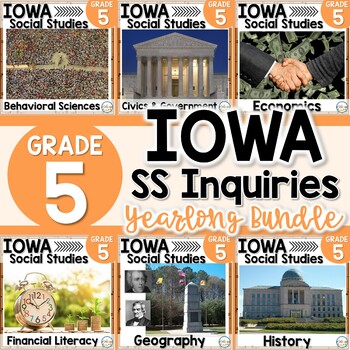
  • Inquiry Units - Our state has some random and specific standards for social studies, so I'm just going to use these units to cover them. It should be pretty quick and easy, leaving us time for other interests.

secular homeschool history curriculum
History

  • UPDATED:
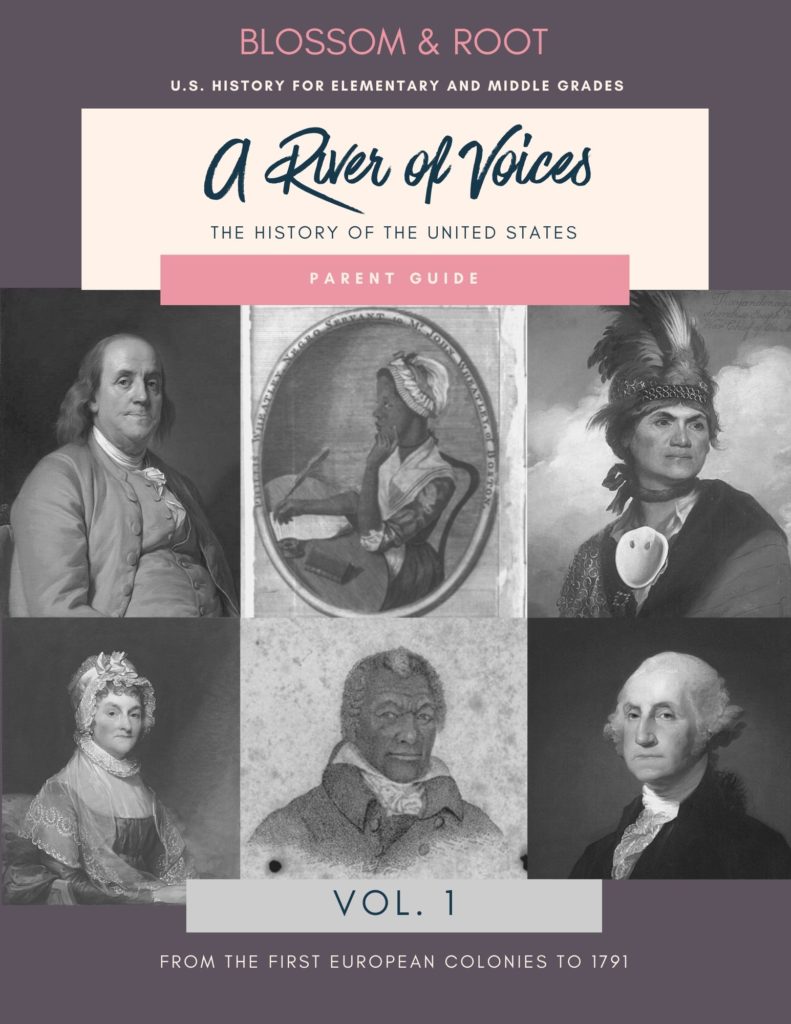
    • Blossom and Root: A River of Voices - I decided to switch to this US history curriculum because I like that it is told from varied perspectives. It involves reading a lot of other books focusing on history from Native American, African American, Latino and White viewpoints. I feel like if I only homeschool Xander for one year (I'm leaving it up to him for middle school), this will provide a better world view and grant us better discussions. 
    • I was originally going to use Story of the World Volume 1: Ancient Times.- Xander loves reading about ancient Greece and Rome, so this seemed like a great fit for history. I will keep this text, because I think he will enjoy reading it, but I will not be assigning any readings or activities.


Economics

  • Elementary Economics Book Club - Xander asked to do economics, business and government. He's going to reread the Tuttle Twins books and do the discussion questions. He also wants to read a bunch of other nonfiction books about these topics.

Logic and Thinking Skills
Spanish
  • IXL Spanish
  • Movies and Videos in Spanish
Choice Time
Xander's required school subjects will only take up a couple of hours a day max and I don't want the entire rest of his day to be completely unstructured. Therefore, a portion of his day will be "Choice Time," where he gets to choose what he wants to do from a pretty loose list of educational activities. I've listed some of the options below, but I plan to approve anything reasonable he wants to do.
  • IXL
  • Email friends (in real sentences)
  • Creative writing
  • Learning videos
  • Reading new books or nonfiction (he tends to reread old favorites only if given the choice)
  • Turing Tumble/Snap Circuits
  • Hour of Code
  • Hooda math
  • SolveMe Mobiles
  • Educational websites
  • Educational iPad Apps
  • Art
  • Movies in Spanish
  • Logic Games
Music

  • Piano Lessons - Xander has been taking piano lessons for a few years now, so will continue.

Friday Email

  • We're planning on having Xander write a weekly email to his grandparents, updating them on all the things he has been learning in school and anything else going on. It will be a good way to make sure he stays in communication with them, as well as good practice giving good explanations/summaries (avoiding getting stuck on very specific details) and writing paragraphs.


Non-Fiction
Xander LOVES to read, so I have no doubt he will spend lots of his choice time (and free time) reading. He reads both fiction and non-fiction, and we're fortunate enough to have collected a lot of non-fiction over the years. Here are some of the books that we've gotten for year, are on our wish list or we've moved to the home school shelf to augment his schooling. (Can you tell he's very interested in brain teasers, politics and math?)


Fun Extras

  • Board Games - I've already written about several of the fun board games we play and their educational value (although we have many more that I just haven't written about). We will incorporate them into our school week to build critical thinking skills.
  • Lap Desk - Xander likes to read and do school work in all sorts of weird places. He is super pumped about the idea of this portable desk.
Related Posts Plugin for WordPress, Blogger...